

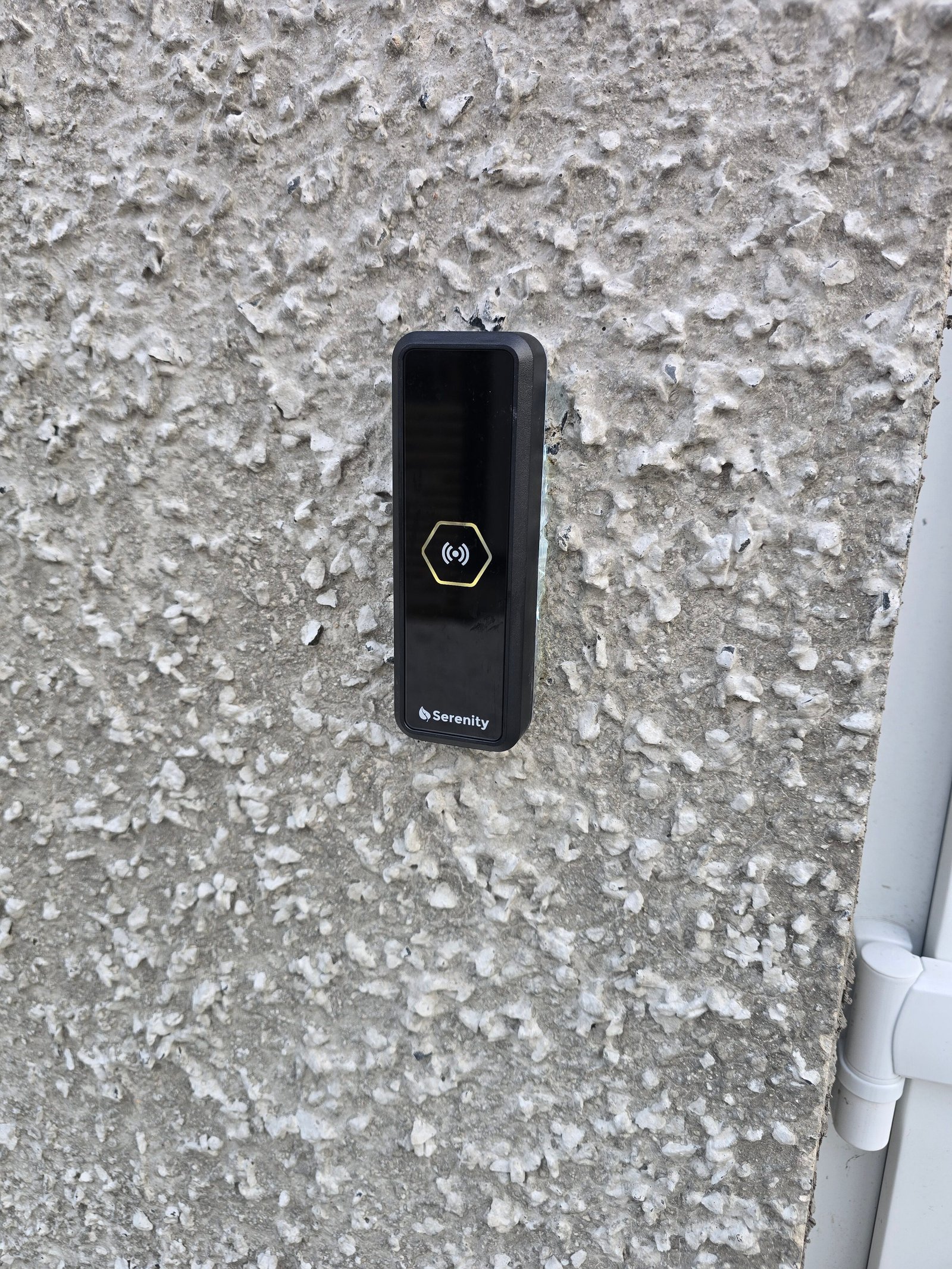
Why Northern Ireland Businesses Are Investing in Access Control Systems
For businesses across Northern Ireland, balancing security, staffing costs and customer convenience has never been more important. Whether you operate a retail shop in Belfast, manage an office in Derry/Londonderry, run a warehouse or oversee a commercial building, finding smarter ways to manage your premises can make a real difference to your day-to-day operations.
One solution that is becoming increasingly valuable is the installation of access control systems.
Modern access control technology gives businesses greater control over who can enter their premises, when they can enter and which areas they are permitted to access. But the benefits go far beyond security. The right system can help businesses extend opening hours, reduce reliance on staff for access management, improve operational efficiency and provide greater flexibility for employees and customers.
At CME Security NI, we provide professionally installed access control systems for businesses throughout Northern Ireland, helping organisations find security solutions that work for their premises, people and budgets.
Here are some of the key reasons why your business could benefit from investing in an access control system.
1. Extend Opening Hours Without Increasing Staffing Costs
One of the biggest advantages of modern access control systems is the opportunity to offer more flexible access to your premises without necessarily needing additional staff on site.
Traditionally, businesses have relied on employees to unlock doors, supervise entrances and secure buildings at the end of the working day. Extending opening hours could therefore mean paying someone to remain on site simply to manage access.
Access control systems offer an alternative.
Using keypads, access cards, fobs or smartphone-based entry, businesses can authorise approved individuals to enter at designated times without requiring a member of staff to physically open the door.
For example:
- Gyms and fitness facilities can offer early-morning or late-night access to authorised members.
- Offices and business centres can allow employees to work flexible hours without requiring reception staff to remain on duty.
- Retail businesses can arrange controlled access for deliveries, cleaning teams and approved contractors outside normal trading hours.
- Serviced offices and shared workspaces can provide tenants with access according to their individual agreements.
- Warehouses and industrial premises can allow authorised personnel to access specific areas for shift work or scheduled deliveries.
For businesses considering longer opening hours, this flexibility can make expansion more practical. Instead of increasing staffing simply to manage doors and entrances, you can automate much of the access process.
The actual savings will depend on your premises, staffing arrangements and operating model, but reducing the need for dedicated access management can free up valuable resources.
2. Reduce Staffing Costs and Improve Operational Efficiency
Labour costs are a significant consideration for businesses of every size. While employees remain essential to delivering products and services, not every security task requires someone to carry it out manually.
A professionally installed access control system can automate routine entry management, helping businesses make better use of their existing workforce.
Consider an office building that requires reception cover throughout extended business hours. With an appropriate access control system, authorised employees can enter using a card, fob or PIN, reducing the need for reception staff to manage every arrival.
Similarly, a commercial property manager overseeing multiple tenants may no longer need to arrange manual key handovers every time access requirements change.
The potential benefits include:
- Less time spent issuing, collecting and managing physical keys.
- Reduced need for staff to supervise routine building access.
- Fewer interruptions caused by lost keys or lock changes.
- Easier management of employee, contractor and visitor permissions.
- More efficient access arrangements across multiple doors or buildings.
Importantly, access control is not about replacing staff who provide essential customer service or security. It is about removing unnecessary manual tasks so your team can concentrate on more productive work.
Over time, these efficiencies can contribute to lower operating costs and a more streamlined business.
3. Improve Security and Control Who Enters Your Premises
Traditional keys offer limited control over who can access a building. Once a key has been copied or passed to another person, it can be difficult to know who has access or when it is being used.
Access control systems provide a more manageable approach.
Depending on the system installed, entry can be restricted using PIN codes, proximity cards, key fobs, biometric identification or smartphone credentials. Access permissions can also be assigned according to individual users, departments, locations and times.
This means you can give employees access to the areas they need without automatically granting access to the entire building.
For example, a retail business could restrict access to stockrooms and offices, while a warehouse could separate general staff access from secure storage areas. An office could limit entry to server rooms or locations containing confidential information.
If an employee leaves the business, their access credentials can be revoked without replacing every lock throughout the premises.
This level of control helps reduce the risks associated with unauthorised entry, lost keys and outdated access permissions.
For businesses handling valuable stock, equipment, confidential information or sensitive records, this additional control can be particularly beneficial.
4. Manage Access Remotely From Almost Anywhere
Modern access control systems can offer cloud-based management and smartphone app functionality, giving business owners and managers greater flexibility.
Depending on the technology selected, authorised administrators can manage users, update access permissions and review entry records remotely.
Imagine receiving a call from a contractor who needs access to your premises before your normal opening time. Rather than travelling to the site to hand over a key, you may be able to grant the appropriate access remotely.
Likewise, if an employee loses their access card, their permissions can often be disabled quickly, helping prevent unauthorised use.
Remote management can be especially useful for:
- Business owners who oversee more than one location.
- Property managers responsible for multiple tenants.
- Businesses operating outside standard office hours.
- Facilities managers coordinating contractors and maintenance teams.
- Organisations with staff working flexible or rotating shifts.
Instead of relying on physical keys and face-to-face handovers, businesses can manage access through a centralised system.
This creates a more flexible way to operate while maintaining oversight of who is authorised to enter.
5. Keep an Audit Trail of Building Activity
Knowing who has entered your premises, and when, can be valuable for day-to-day management and security investigations.
Many access control systems record entry events, creating an audit trail that authorised administrators can review when required.
This can help businesses understand building activity, investigate unexpected access and review the use of restricted areas.
For example, if equipment goes missing from a secure storeroom, entry records may help establish which credentials were used to access the area and at what time.
Similarly, businesses with multiple shifts can use access records to support their understanding of when authorised personnel entered particular areas.
It is important to remember that an access record shows the use of a credential, not necessarily definitive proof of the identity of the person using it. Appropriate procedures and, where necessary, additional security measures remain important.
Businesses should also ensure that access records are handled appropriately, with suitable privacy controls and retention policies.
When implemented correctly, an audit trail adds another useful layer of visibility and accountability to your security arrangements.
6. Give Employees and Customers Greater Convenience
Security should protect a business without creating unnecessary obstacles for the people who legitimately need to enter it.
Access control systems can make everyday access simpler by replacing traditional keys with convenient alternatives.
Employees can use access cards, fobs or authorised mobile credentials rather than carrying multiple keys. Visitors can be directed through video door entry systems, allowing staff to see and speak to callers before granting entry where appropriate.
For businesses with shared entrances, multiple departments or separate tenant areas, permissions can be tailored to suit different requirements.
This can improve the experience for employees, customers, tenants and contractors while helping maintain appropriate security.
It can also simplify the process of welcoming new employees. Instead of arranging physical keys for every door, an administrator can assign suitable access permissions as part of the onboarding process.
When someone changes roles or leaves the organisation, those permissions can be updated accordingly.
The result is a more convenient and manageable approach to building access.
7. Integrate Access Control With CCTV and Alarm Systems
Access control becomes even more useful when it forms part of a wider business security strategy.
At CME Security NI, access control solutions can be integrated with CCTV and intruder alarm systems where compatible, helping businesses coordinate different aspects of their security.
For example, CCTV can provide visual information about activity around an entrance, while access control records when a credential was used. Together, these systems can help authorised personnel investigate incidents more effectively.
An intruder alarm can provide an additional layer of protection by detecting potential unauthorised activity, particularly outside normal operating hours.
This integrated approach is suitable for a wide range of commercial environments, including:
- Retail premises and shops.
- Offices and business parks.
- Warehouses and distribution centres.
- Industrial and manufacturing facilities.
- Schools and educational buildings.
- Healthcare premises and care settings.
- Multi-tenant and serviced office buildings.
Rather than managing several disconnected security arrangements, businesses can work towards a more coordinated solution designed around the risks and requirements of their premises.
The precise integration options will depend on the equipment selected and the existing systems installed.
8. Reduce the Problems Associated With Lost or Stolen Keys
Lost keys can create more than a minor inconvenience for a business. Depending on the circumstances, they can create a potential security risk and lead to the expense of replacing locks or arranging emergency access.
If a traditional key is lost and there is uncertainty about who might possess it, a business may need to consider changing the affected locks.
With electronic access control, the response can be much simpler.
If an employee loses an access card or fob, an administrator can usually deactivate that credential and issue a replacement without changing the locks on every door it could previously open.
The same principle applies when an employee leaves the organisation or a contractor’s authorisation ends.
Businesses can update permissions as circumstances change, helping maintain better control over access without the disruption associated with traditional key management.
This is particularly useful for larger workplaces, multi-tenant properties and organisations with frequent staff turnover.
9. Choose a System That Can Grow With Your Business
Every business has different security requirements. A small office with one entrance will have different needs from a warehouse with several buildings, secure storage areas and multiple employee shifts.
The good news is that access control systems are available in a variety of configurations.
Depending on your requirements, suitable options may include:
Keypad entry systems: Allow authorised users to enter using a PIN code, making them useful for controlled access to individual doors.
Card and fob access control: Provide convenient entry for employees, tenants and approved visitors, with permissions managed electronically.
Biometric access control: Uses identifying characteristics such as fingerprints or facial recognition for selected high-security applications, subject to appropriate privacy and data-protection considerations.
Video door entry: Allows staff to see and communicate with visitors before granting access.
Cloud-based access control: Enables authorised administrators to manage users and permissions remotely through a compatible platform.
Multi-door access control: Allows access permissions across several entrances or areas to be managed through a coordinated system.
The right solution depends on the size of your premises, the number of users, your operating hours and the level of security required.
Planning for future growth can also help avoid unnecessary upgrades as your business expands or your working arrangements change.
10. Why Northern Ireland Businesses Should Consider Access Control Now
From Belfast’s commercial offices and retail units to industrial estates, warehouses and business parks throughout Northern Ireland, organisations need security arrangements that support the way they operate today.
Businesses increasingly need to accommodate flexible working, out-of-hours deliveries, contractors, multiple shifts and changing access requirements.
Relying entirely on traditional keys and manually supervised entrances can make these arrangements more difficult to manage.
Access control systems offer a practical alternative by combining security with convenience and operational flexibility.
For some businesses, the greatest benefit may be the ability to extend opening hours without adding dedicated door-management staff. For others, it could be reducing key-management problems, securing sensitive areas or managing several locations remotely.
The important thing is to choose a system that addresses your actual business needs rather than simply installing technology for its own sake.
A professional assessment can help identify where controlled access would make the biggest difference and which features are worth investing in.
Why Choose CME Security NI for Access Control Systems?
At CME Security NI, we provide access control solutions designed around the requirements of individual properties and businesses.
Our services include options such as keypad entry, card and fob systems, biometric access control, video door entry and cloud-based management, depending on the needs of your premises.
We work with commercial properties of different sizes throughout Northern Ireland, helping businesses improve security, manage entry permissions and explore opportunities to operate more efficiently.
We can also advise on integrating access control with existing CCTV and intruder alarm systems, creating a more joined-up approach to premises security.
Our focus is on providing dependable equipment, professional installation and ongoing support to help keep your system operating effectively.
Whether you are upgrading an existing security arrangement, fitting out new commercial premises or looking for a better way to manage out-of-hours access, we can help you explore the options.
Find out more about our access control systems in Northern Ireland.
Take the Next Step Towards Smarter Business Security
Investing in access control systems is about more than deciding who can open a door. It is an opportunity to improve security, simplify building management and give your business greater flexibility.
By automating routine access, businesses may be able to extend operating hours, reduce the need for staff to supervise entrances, simplify key management and make better use of existing resources.
Combined with remote management, entry records and integration with CCTV and alarms, the right system can become a valuable part of your wider business operations.
If you run a business in Belfast or elsewhere in Northern Ireland, now is a good time to review whether your existing access arrangements are still meeting your needs.
Contact CME Security NI to discuss your access control requirements and find a solution tailored to your premises.
Visit CME Security NI to learn more about our security services and get in touch with our team.
Frequently Asked Questions About Access Control Systems
What is an access control system?
An access control system manages who can enter a building or a particular area and when they are permitted to enter. Depending on the system, access may be controlled using PIN codes, cards, fobs, biometric identification or smartphone credentials.
Can access control systems help reduce business costs?
Yes. Access control can reduce the time spent managing physical keys and supervising routine entry. For businesses that currently require staff to open doors or oversee access outside normal hours, automation may also reduce staffing requirements. Actual savings depend on the business and its operating model.
Can access control systems allow businesses to extend opening hours?
Yes. Authorised employees, members, tenants or contractors can be given access during specified periods without requiring someone to be physically present to unlock the entrance. This can make extended or flexible opening hours more practical, provided other operational, safety and supervision requirements are met.
Can I manage my access control system remotely?
Many modern cloud-based systems allow authorised users to manage access permissions, deactivate credentials and review entry records remotely through a secure app or online platform. Available features vary by system.
Can access control be integrated with CCTV and burglar alarms?
Yes. Compatible systems can be integrated to provide a more coordinated security solution, combining controlled entry with video monitoring and intruder detection.
Are access control systems suitable for small businesses?
Absolutely. A small business may benefit from a simple keypad or fob-based system for one or two entrances, while larger organisations may require networked systems covering multiple doors, buildings or departments.
Who installs access control systems in Northern Ireland?
CME Security NI provides professional access control system installation and support for homes and businesses throughout Northern Ireland. Visit the access control service page to explore the available options.


